
WHAT THIS MEANS FOR YOU
What did the researchers observe?
This Enagic-sponsored report brings together cell experiments and a pilot study with 13 healthy adult men. Here are its main observations in plain language, before we look at how the studies were done.
Less soreness and a better sense of recovery
In the small exercise study, the report describes reduced soreness, better self-reported recovery, and improvements in energy and overall wellbeing after drinking alkaline ionized water compared with tap water.
Changes that may help explain those experiences
The report recorded statistically significant changes in some red-blood-cell measures and lower counts of some inflammatory cells. The author interpreted these as encouraging signs related to oxygen carrying and exercise recovery.
Early clues about antioxidant activity and cell function
Laboratory tests found mild, reproducible antioxidant activity, fewer free radicals released by inflammatory cells, and increased metabolism in one cell type under specific conditions. These findings provide a starting point for studying how the water interacts with cells.
The value of this report, in plain language
It offers preliminary evidence that this water may affect more than its pH reading: researchers recorded changes in cells, blood measurements and how participants felt after exercise. These observations give researchers specific questions to explore about drinking water and recovery.
Based on H. S. Filtzer’s 2017 Enagic-sponsored report, especially printed pages 10–16. Plain-language summary of the report.
PRIMARY SOURCE
Where this research comes from
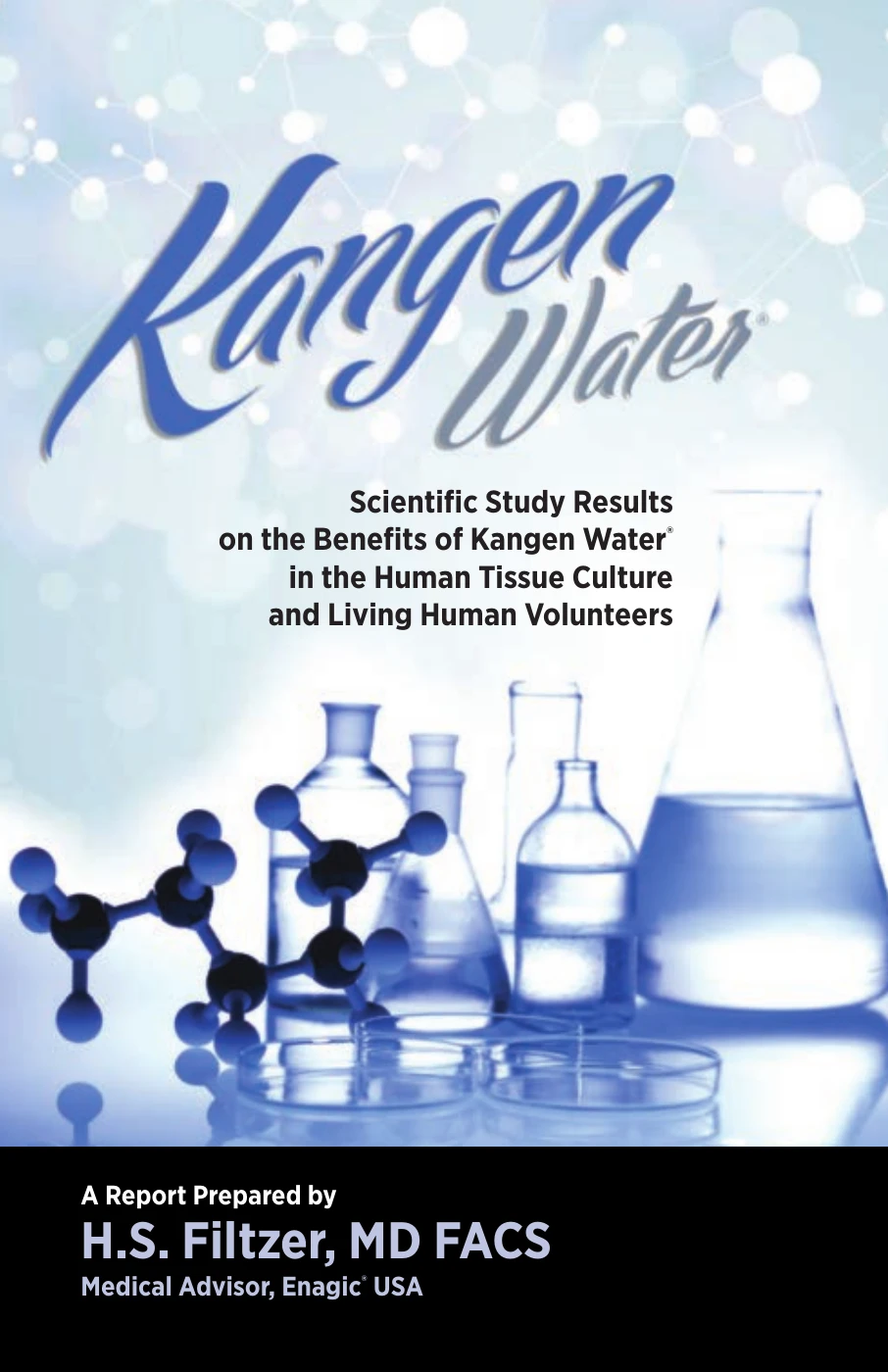
The primary source is a 2017 report prepared by H. S. Filtzer, MD, FACS, Medical Advisor to Enagic USA. The report brings together Enagic-sponsored laboratory work by NIS Labs, a 13-person exercise pilot study and a later discussion of stored-sample cytokine and SOD analysis.
Dr. Filtzer set out to explore measurable biological responses. This article follows that journey from laboratory testing to exercise and recovery in human volunteers.
WHY STUDY THE WATER?
From a glass of water to a measurable response
The researchers moved from measuring the water’s pH and ORP to testing responses in cells and human volunteers. Each stage asked a different question.
Study the water
Measure pH, ORP and dissolved components.
Observe cells
Test antioxidant activity, immune-cell responses and metabolism.

Compare human responses
Compare exercise and recovery under two drinking conditions.
THREE STUDIES, ONE RESEARCH JOURNEY
What did each study test?
STUDY 119-001
Antioxidant capacity and inflammatory-cell response
Human cell cultures were used to test direct antioxidant capacity, cellular protection and free-radical production by inflammatory cells. The report found mild but reproducible direct antioxidant capacity. It did not find cellular protection above tap water under the strong stress protocol used.
STUDY 119-002
Cell viability and mitochondrial metabolism
Short-lived PMN cells and longer-lived PBMC cells were studied under different glucose conditions. A dose-related increase in PMN metabolic activity appeared after four hours in the higher-glucose medium. The same result was not seen across PBMC cells or every condition.
STUDY 119-004
Exercise stress and recovery
Thirteen healthy adult men took part in a randomized, controlled crossover study. After periods drinking alkaline ionized water or tap water, participants completed a high-intensity exercise challenge. Researchers measured blood-cell counts, lactate and reported wellbeing.
TERMS WITHOUT THE JARGON
Four ideas that make the research easier to read
Oxidation
A chemical process involving electron loss. In biology, excessive reactive oxygen species can damage cellular components.
Antioxidant
A substance or system that can limit certain oxidative reactions.
Neutrophils and PMN cells
Short-lived immune cells that can respond quickly and release reactive molecules during inflammation.
PBMC cells
A mixed group of longer-lived blood immune cells, including lymphocytes and monocytes.
WHAT THE LABORATORY OBSERVED
What the cell experiments found
Antioxidant activity
The direct antioxidant result was modest. The report described it as “mild, but real and reproducible.” Reproducibility matters because a result that appears again under the same procedure is more useful than a one-off observation. The separate cellular-protection assay did not outperform tap water under the strong free-radical stress protocol.
Inflammatory response
Inflammatory cells exposed to alkaline ionized water produced fewer free radicals in this laboratory model. Inflammation itself is a normal protective process.
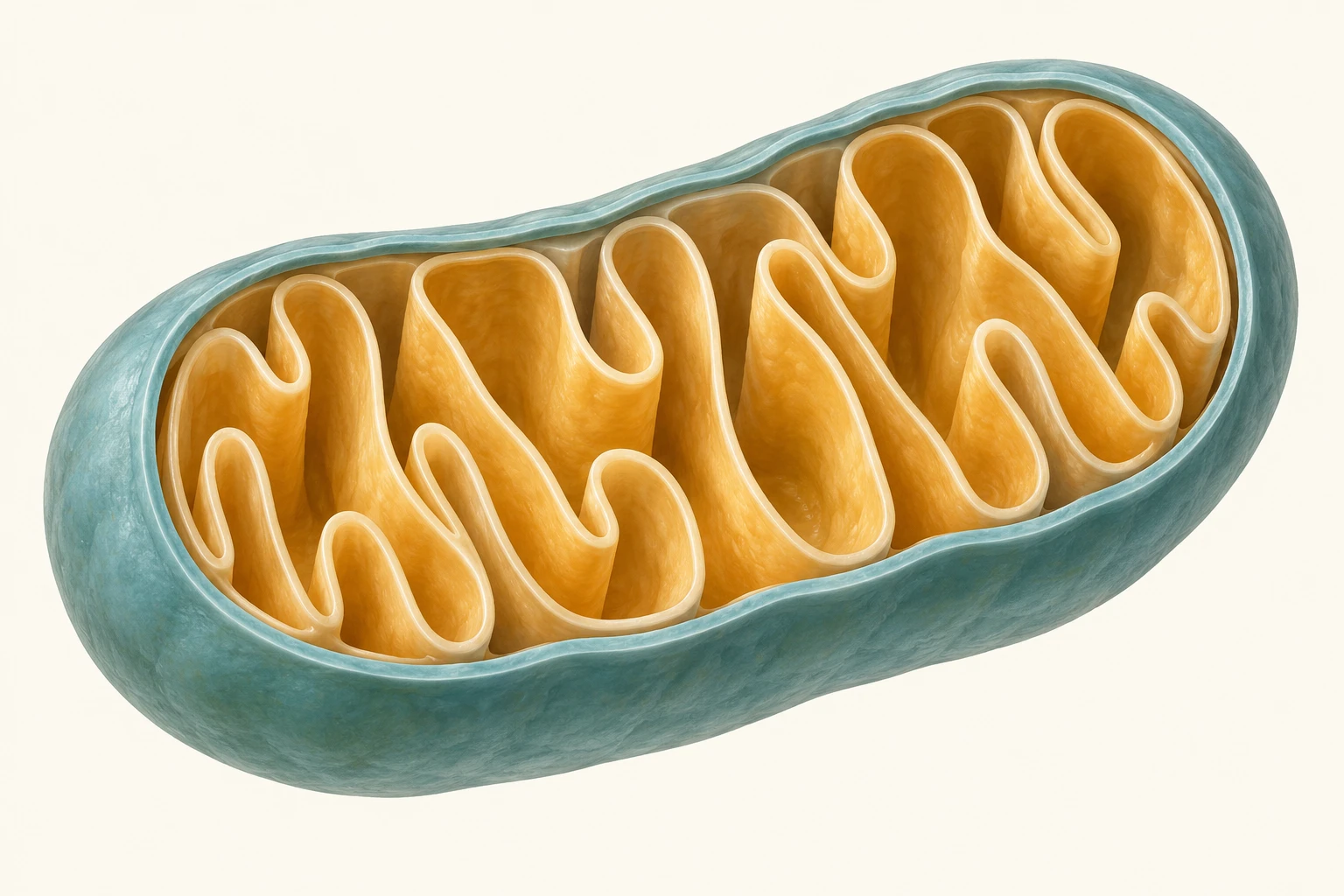
THE CELLULAR ENGINE
Mitochondria turn fuel into usable cellular energy
Study 119-002 measured how actively cultured cells carried out metabolic processes. In four-hour PMN cultures using the higher-glucose medium, metabolic activity increased with dose. Four-hour PBMC cultures showed no effect. In 24-hour PBMC cultures, both alkaline ionized water and tap water slightly reduced viability or metabolism in the lower-to-moderate glucose medium.
FROM CELLS TO HUMAN VOLUNTEERS
How the 13-person crossover study worked
In a crossover design, the same participants experience different study conditions at separate times. Each person can therefore serve as his own comparison.
13 healthy adult men
Everyone tried both drinking conditions. The order was randomized, so each participant could be compared with himself.
Illustrative photograph, not an actual study participant.Two orders. The same comparison.
Each drinking period lasted one week before the exercise test.
The report does not specify the number in each starting order or a washout period.
The same exercise test after each period
Repeat this sequence for 5 rounds.
- Push-ups20 seconds, then rest 20 seconds
- Sit-ups20 seconds, then rest 20 seconds
- Air squats20 seconds, then rest 20 seconds
What did the researchers compare?
Blood samples
Blood-cell counts were the main outcome. Plasma lactate was a secondary measure.
Exercise response
Pulse during rest periods, average and maximum heart rate, and estimated VO2max.
How participants felt
Questionnaires before, immediately after and one hour after exercise covered soreness, energy and wellbeing.
Study 119-004. Source: report, printed pages 13–15. A small pilot study involving 13 participants.
EXERCISE STRESS AND RECOVERY
What changed after exercise?
Blood measures
The report describes statistically significant differences in selected red-cell and inflammatory-cell measures after the drinking periods.
Lactate
The booklet reports a mild trend toward a faster return to normal plasma lactate.
Reported recovery
Questionnaires recorded differences in soreness, physical and mental energy, focus and overall wellbeing.
No significant difference
Average heart rate, maximum heart rate and estimated VO2max did not differ significantly between the two drinking conditions.
CYTOKINES
How immune cells send messages
Cytokines are signalling proteins. In later analysis of stored samples, IL-1ra, TNF-alpha and MCP-1 rose after exercise under both conditions, but the report says the increases were smaller and returned to baseline faster after alkaline ionized water. IL-8 and MIP-1 beta rose more strongly yet also returned faster. IL-1 beta, IL-6, IL-10, IFN-gamma and G-CSF were generally below detection.
Reported after exercise
Smaller rise, faster return to baseline
Larger rise, faster return to baseline
Generally below detection
THE BODY'S ANTIOXIDANT DEFENCE
What the report observed about SOD
SOD is an enzyme that helps convert superoxide radicals into less reactive molecules. The report says the later stored-sample analysis found a marked SOD response, which Dr. Filtzer called “the most profound revelation of the study.”
THE MOST IMPORTANT FINDINGS
Six findings at a glance
Review all six findings
Antioxidant activity
Direct antioxidant capacity was described as mild, real and reproducible. The separate cellular-protection test did not show protection above tap water under that protocol.
Inflammatory-cell response
Inflammatory cells exposed to the test water produced fewer free radicals in the laboratory model.
Cellular metabolism
Metabolic activity increased in PMN cells under one higher-glucose, four-hour condition. Results differed by cell type, glucose level and duration.
Blood-cell response
The report describes statistically significant differences in selected CBC measures, including red blood cells, haemoglobin, haematocrit and some inflammatory-cell counts after the drinking periods.
Recovery and wellbeing
Participants reported differences in soreness, energy and overall wellbeing. The report also notes only a mild trend toward faster lactate normalization, and no significant heart-rate or VO2max difference.
Cytokines and SOD
Stored samples were later analysed for selected cytokines and superoxide dismutase. The booklet describes different cytokine response patterns and a marked SOD response.
WORDS FROM THE REPORT, IN CONTEXT
“Mild, but real and reproducible.”
Direct antioxidant capacity, Study 119-001
“the most profound revelation of the study”
Dr. Filtzer's interpretation of the later SOD observation
WHO SHOULD READ THIS?
THE PRIMARY REPORT
Scientific Study Results on the Benefits of Kangen Water in the Human Tissue Culture and Living Human Volunteers
H. S. Filtzer, MD, FACS · Medical Advisor, Enagic USA
KWH reviewed the complete 35-page project copy. The file contains a copyright notice, and part of the appended strategic plan states that it may not be distributed without written permission. We therefore do not publish an unrestricted download without documented rights. No verified official publisher or reputable current purchase listing was found.
Ask About the Research ReportSCIENTIFIC REFERENCES
Report and related scientific references
Filtzer HS. Scientific Study Results on the Benefits of Kangen Water in the Human Tissue Culture and Living Human Volunteers. 2017. Includes NIS Labs reports 119-001, 119-002 and 119-004, plus later commentary on cytokines and SOD.
RELATED SCIENTIFIC LITERATURE
These publications explore electrolyzed reduced water using different models, water systems and methods. The study type is listed with each reference.
- Shirahata S, et al. Electrolyzed-reduced water scavenges active oxygen species and protects DNA from oxidative damage.
Biochem Biophys Res Commun. 1997;234(1):269-274. PMID 9169001. DOI 10.1006/bbrc.1997.6622.
In vitro biochemical and DNA model - Kashiwagi T, et al. Electrochemically reduced water protects neural cells from oxidative damage.
Oxid Med Cell Longev. 2014;2014:869121. PMID 25383141. DOI 10.1155/2014/869121.
Rodent neuronal cell lines and primary cells - Hamasaki T, et al. Electrochemically reduced water exerts superior reactive oxygen species scavenging activity in HT1080 cells.
PLoS One. 2017;12(2):e0171192. PMID 28182635. DOI 10.1371/journal.pone.0171192.
In vitro human fibrosarcoma cell model; industry affiliation and funding disclosed - Choi YA, et al. Outcomes Assessment of Sustainable and Innovatively Simple Lifestyle Modification at the Workplace - Drinking Electrolyzed-Reduced Water.
Antioxidants (Basel). 2020;9(7):564. PMID 32605142. DOI 10.3390/antiox9070564.
Randomized, double-blind, placebo-controlled human trial; ERW, not a Kangen-specific product trial - Huang KC, et al. Electrolysed-reduced water dialysate improves T-cell damage in end-stage renal disease patients with chronic haemodialysis.
Nephrol Dial Transplant. 2010;25(8):2730-2737. PMID 20190245. DOI 10.1093/ndt/gfq082.
Human haemodialysis study using ERW dialysate, not drinking water
This article explains an Enagic-sponsored report for general education. The future possibilities discussed are research questions, not established product benefits. It is not medical advice.